
Nirvana Bootlegs: An Introduction
Clinton Heylin - Bootleg! / Nirvana: The Alternative CD & Vinyl Collectors Guide

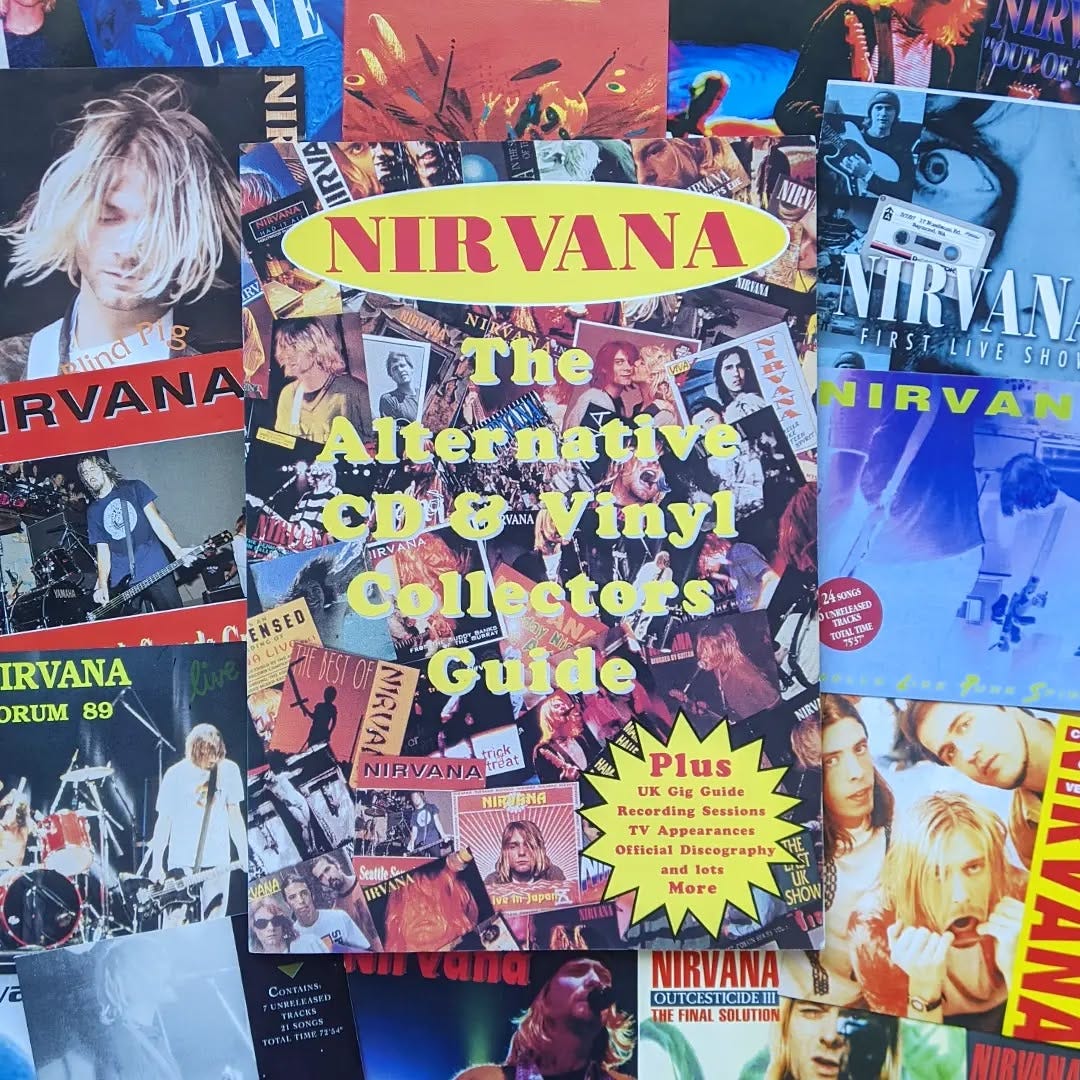
I first became aware of bootlegs when I was about 14 after my friend returned from a French exchange visit with a dubbed tape of Nirvana songs that we had only read about in books. I couldn’t believe I was actually hearing stuff like ‘If You Must’ and ‘Pen Cap Chew’, songs that my small library of publications told me had been left in the vaults. I couldn’t comprehend how such material could end up on a tape in my hi-fi. Not too long after, I would begin making regular pilgrimages to the London CD & Record Fair and to Camden where bootleg CDs could be found in plentiful supply at the Electric Ballroom and with many other stallholders around the Lock Market. Good times. Aside from live tapes with photocopied covers, obviously taped from the audience, I didn’t really stop to consider how this material was sourced, who was responsible for pressing it to disc and how this whole shady deal worked. I knew you couldn’t find these CDs in Our Price or HMV, but sometimes summer holidays to continental Europe would yield a few rare gems from record shops that simply didn’t seem to give a shit about the ramifications.
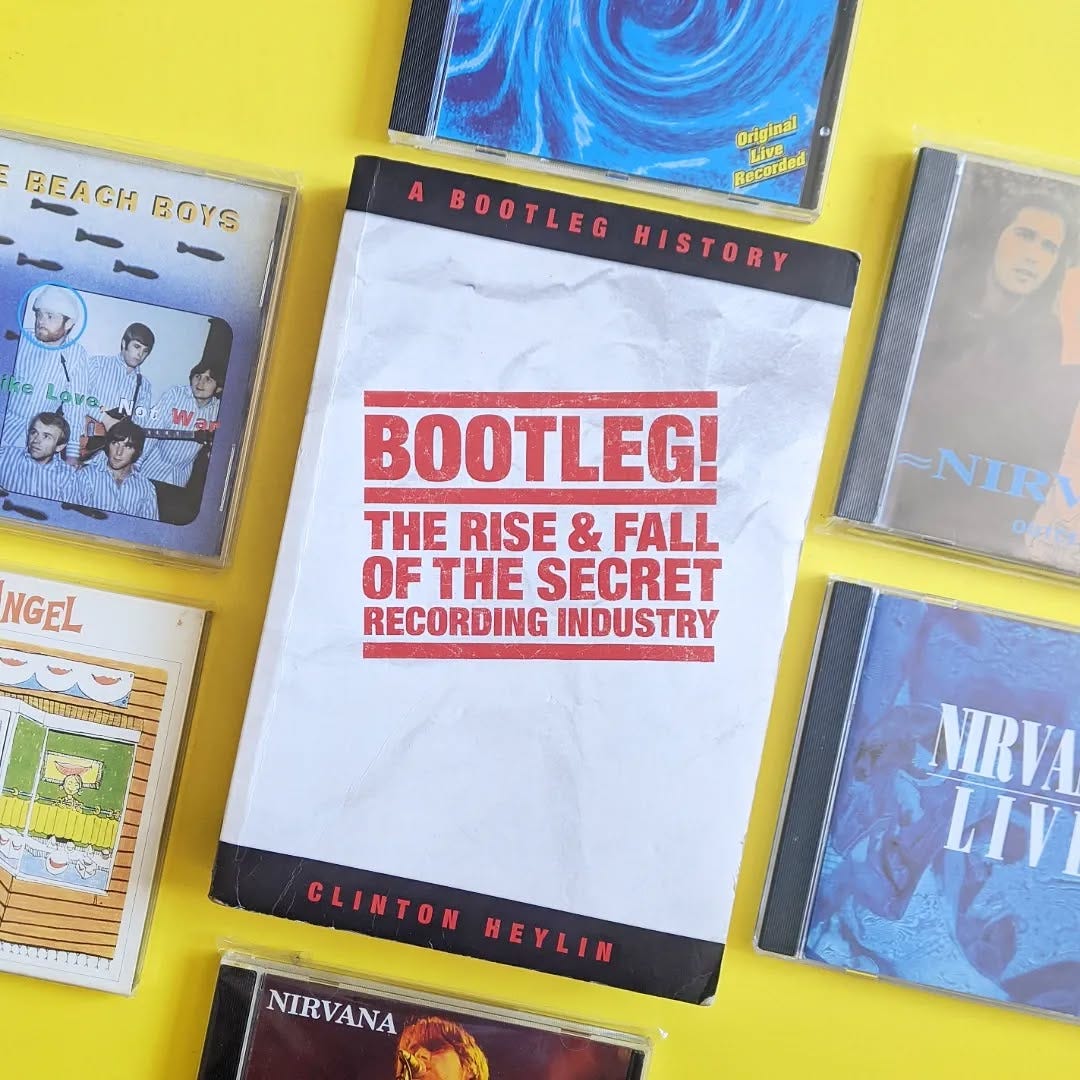
And so it is that decades later this most mystic of arts - bootlegging - was demystified by through Clinton Heylin’s wonderful book Bootleg! The Rise & Fall of the Secret Recording Industry. Heylin really pulls back the curtain, looking at the ways in which rare material was sourced; the practicalities of recording a live concert; the logistics of mastering, pressing and distribution; international transit: the whole lot. Interweaved are some incredible stories of derring-do and the spirit of DIY is infectious. There are some great opening chapters about the history of “bootlegging” going all the way back to Shakespeare’s first folios through to the unauthorised recording of opera and then jazz before arriving at our destination: the rock bootleg. The narrative is constructed to detail the slowly evolving laws and restrictions vs. the ingenuity of the bootleggers amidst ever-evolving technology and shifts in the marketplace as record buyers’ tastes and needs changed.
Heylin details the rise of small vinyl bootleggers pressing Dylan records straight out of Colombia’s plants, through to the mass-produced “protection gap” CDs of Europe. It really paints the bootleggers as folk heroes keeping one step ahead of the law. There’s a sensational account of a sting operation in Florida that really ought to be developed into a film script.
Like any good magician he doesn’t give away all the secrets and some details - such as names - remain shrouded in mystery to retain some magic (and to deflect litigation, no doubt). This really is a secret history, one that Heylin has captured through first hand interviews and arcane newsletters and zines that would otherwise be lost to time.
The updated edition that I read reframes Heylin’s original narrative to capture the tail end of the bootleg era in decline, when CD-Rs and eventually mp3s wiped out the need for the physical format. In his closing paragraph he notes “As we enter a brave new world of instant accessibility - where the rarest of recordings becomes common currency in the click of a mouse - we are moving away from any distinction between official and unofficial canons.” I wonder what Clinton makes of the current online platforms, where music fans still bemoan that songs uploaded to YouTube aren’t on Spotify? Both have the same level of accessibility, but inhabit different worlds of legitimacy. It feels to me sometimes that modern consumers, bristling with a sense of entitlement hitherto unknown, consider anything off-Spotify to be a rarity, even “unreleased”. Before you launch that change.org petition to have your favourite out-of-print CD added to streaming services, think about us poor explorers wasting our teenage years trudging around musty market stalls trying to get our fix of rare rock and be thankful that you can just hear the music, because that’s what it all comes down to in the end!
Of course, this pronouncement of death by Heylin has not been entirely borne out, as plenty of CDs have continued to be released over the last 20 years, especially in Japan where physical media is still respected and desired. Even as we speak, decades-old inferior sources are being pressed to vinyl to meet the buying habits of collectors who will happily stump up cash for the same material again and again.
All of this lead me back to Nirvana bootlegs: a very niche aspect of my collecting as a teenager that had resulted in a modest amassing of maybe 12 titles across CD and cassette. Not long after my initial introduction to the world of unauthorised CDs, I discovered The Alternative CD & Vinyl Collectors Guide (in Virgin Megastore, no less!) that blew open the doors to a whole catalogue of Nirvana bootlegs. There was more out there than Outcesticide. A lot more.
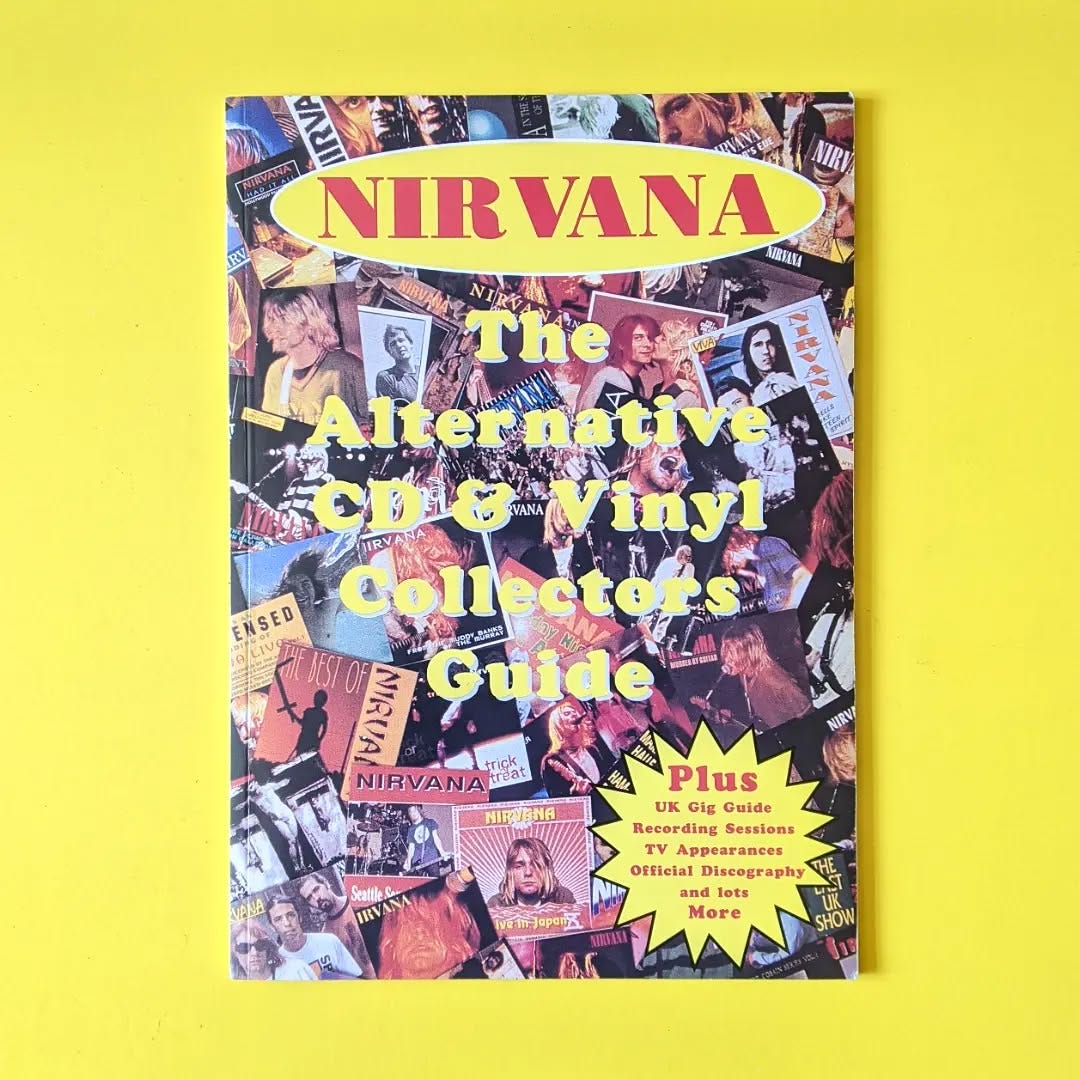
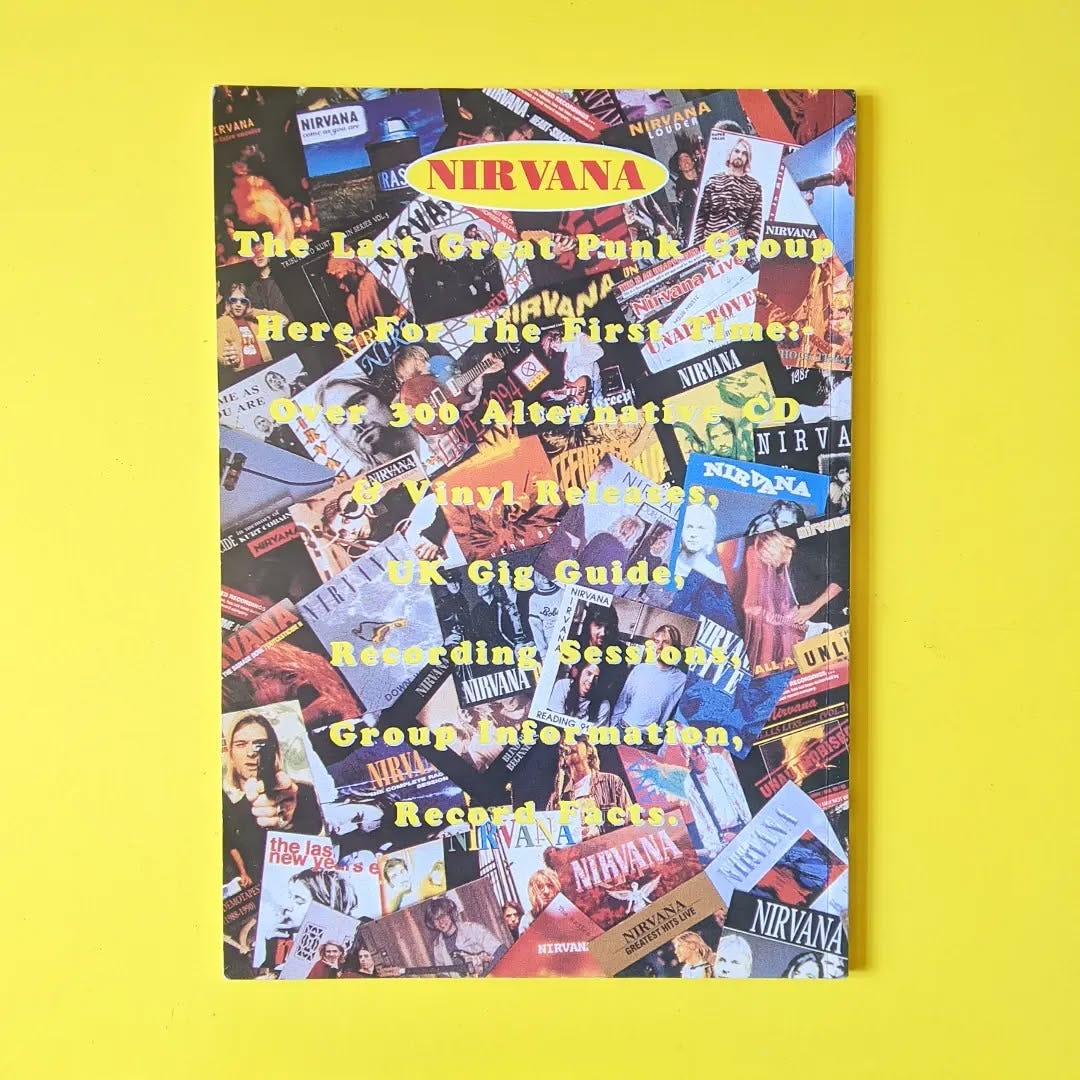
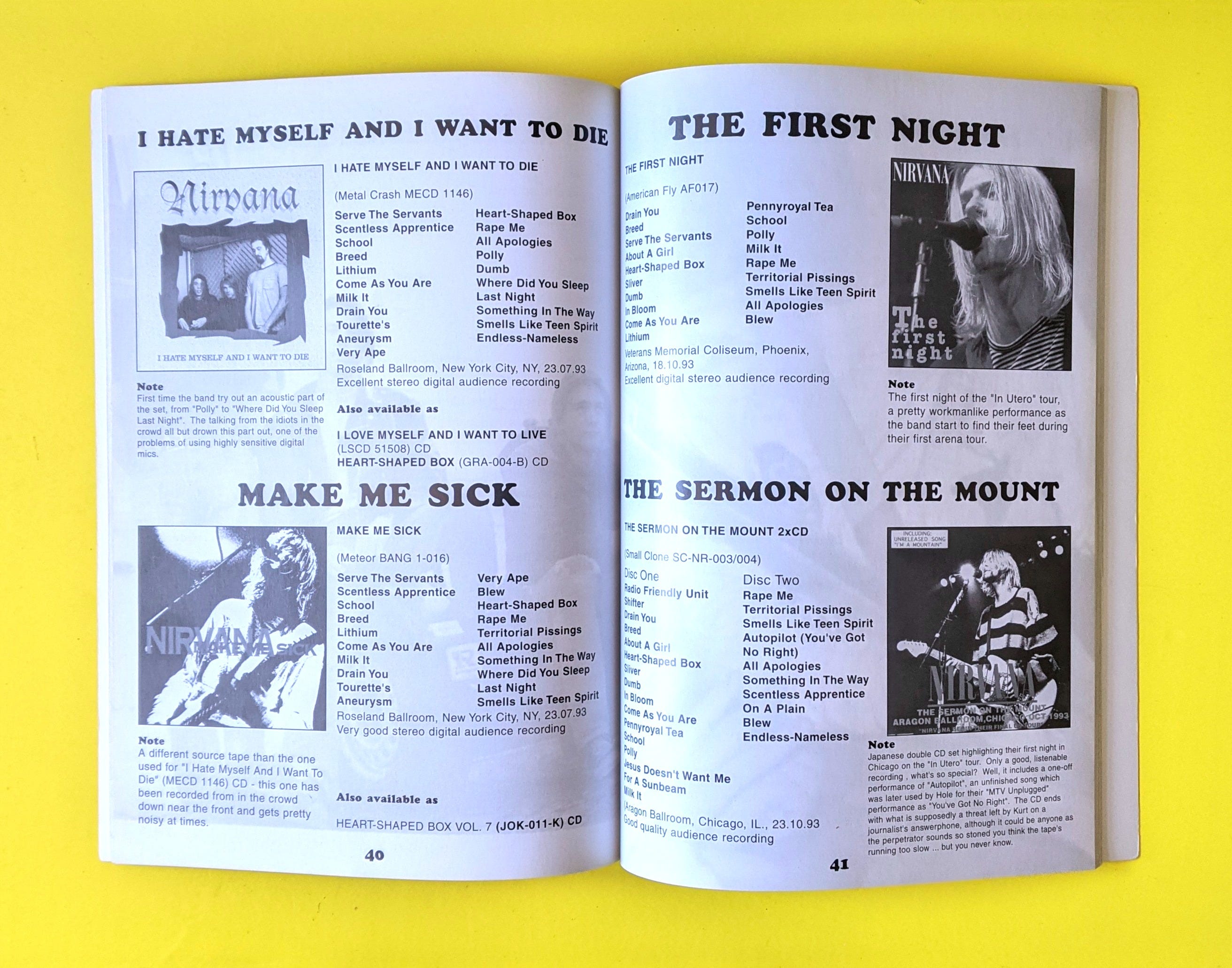
This amazing book listed and reviewed every known bootleg LP, 7” and CD with detailed notes on the sound quality and completeness of the recording, and images of the sleeves of select titles in tantalising black and white! Published sometime in the late ‘90s it still has an air of mystery about it. Who were ‘The Bleach Boys’ who wrote this book? Who published it? How was it that a huge high street retailer like Virgin Megastore came to stock it?
So much information has come available since then, much as a result of the dedicated work of those involved with livenirvana.com, and it makes me smile to think of that time when ‘You Know You’re Right’ was known only as ‘Autopilot’ and we waited in anticipation of the day that the studio recording of ‘Token Eastern Song’ would leak and we could discover if it was, indeed, the live song labelled ‘Junkyard’ by bootleggers.
Flipping through the book, I found myself excited and coveting some of those discs that I most dreamed of uncovering in those illicit CD racks. Heading to Discogs and eBay, I was surprised to find them blocked or banned from sale. Rather than be deterred, this inaccessibility has only seemed to fire my collector spirit – these discs are just as hard if not harder to acquire than they were in the 1990s! The hunt was on…
So, I got back in the collecting game. Rather than just pointlessly accumulate discs, I decided to ensure I listened to each one and briefly review its contents, documenting the process on Instagram. It was only meant to take a few months. A couple of years and 200+ posts later, I finally covered all of my “vintage” CDs.
But as I said – there are more constantly appearing in the market. Often these are previously circulated shows, but offering some kind of upgrade either in quality or completeness. Sometimes they just present the same old material in nifty new packaging. As such, I will be taking the opportunity of the longer-form format that Substack provides to delve into all aspects of each release and question whether it has merit in this era. At the same time, I’ll be revising and republishing my old reviews in a more curated manner, summing up what’s been previously available ahead of looking at each modern release.
Hopefully this proves to be a more comprehensive, interesting and useful way of reviewing what has come to be a rather sizeable collection whilst offering some guidance on the under-documented modern releases.
Great article, I remember getting bootlegs such as 'banned for life' back in early 1993. I was blown away by tracks such as 'downtown','what else could I be','just happy' and 'wreck me'. To find out later I was listening to early live versions in utero tracks. Good times! Cannot replicate that feeling in current times anymore.